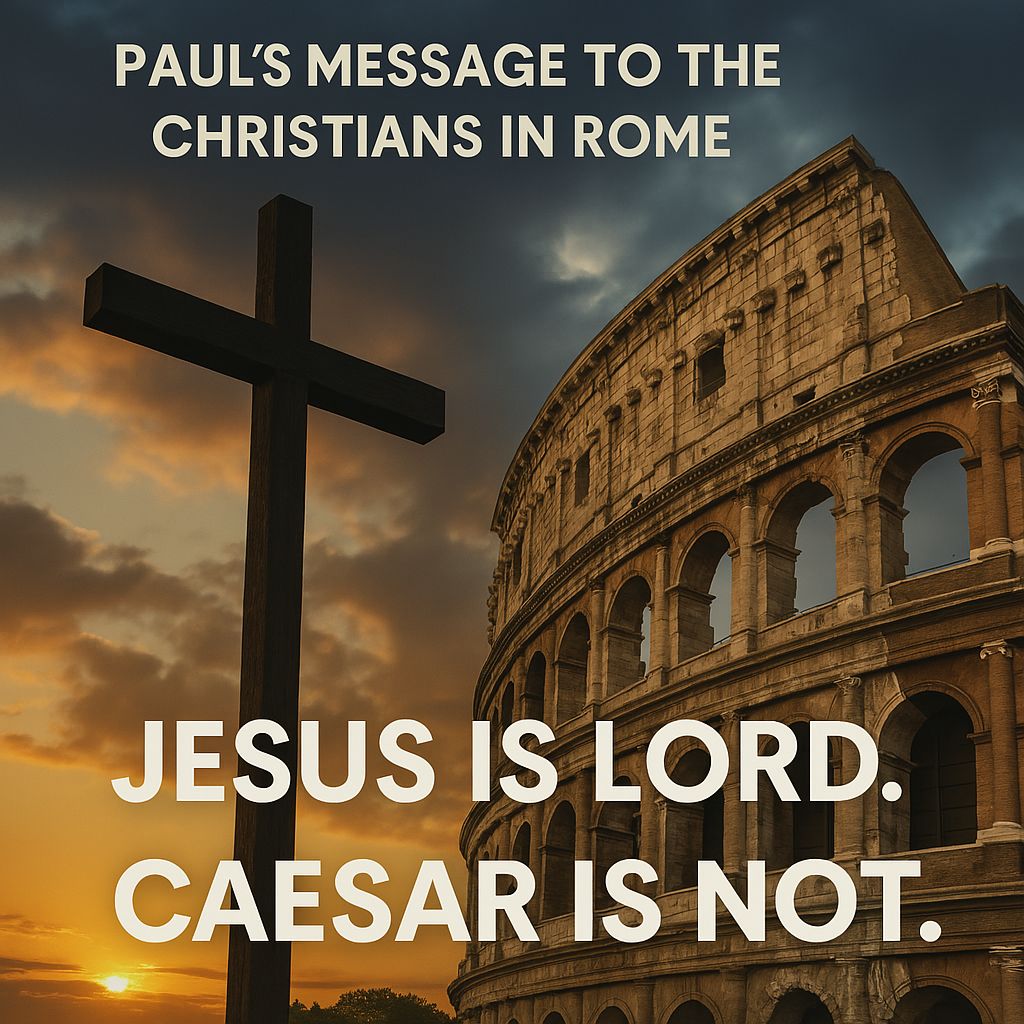
Paul’s epistle to America would read like Romans: rooted in grace, aimed at transformation, and boldly countercultural. Here’s what his major themes might be:
1. On Identity and Power:
“Do not be conformed to this world, but be transformed by the renewing of your minds.” (Rom 12:2)
Paul would challenge American nationalism, individualism, and materialism. He would ask Christians to see themselves not as Republicans or Democrats, not first as Americans, but as citizens of the Kingdom of God. Power is not to be grasped—but surrendered in service.
2. On Division and Polarization:
“There is no distinction… for all have sinned and fall short of the glory of God.” (Rom 3:22–23)
To a nation fractured by race, politics, and class, Paul would proclaim unity in Christ. He would urge reconciliation—not by erasing difference, but by dying to self and embracing each other in grace.
3. On Injustice and Empire:
“Love does no wrong to a neighbor; therefore love is the fulfilling of the law.” (Rom 13:10)
Paul wouldn’t shy away from speaking truth to systems of injustice—especially those masked by law or tradition. Like he wrote about Caesar’s sword, he’d remind us that governments exist to serve justice—not themselves.
4. On Living Christ-Like in a Culture of Excess:
“Clothe yourselves with the Lord Jesus Christ, and do not think about how to gratify the desires of the flesh.” (Rom 13:14)
In a culture obsessed with consumption, self-image, and instant gratification, Paul would preach restraint, simplicity, and generosity.
5. On Hope Amid Chaos:
“The sufferings of this present time are not worth comparing with the glory that is to be revealed.” (Rom 8:18)
To a disillusioned and weary people, Paul would offer hope—not in politics, economy, or security—but in the resurrection power of Christ.
Final Thought
Paul’s message to Rome and to us is the same: Jesus is Lord. Caesar is not. Be transformed. Live sacrificially. Welcome the outsider. And never let empire define your soul.
People toss around all kinds of solutions for the mess we’re in—political reform, better technology, more education. But what if the answer is something ancient? Something that predates capitalism, borders, and even organized religion?
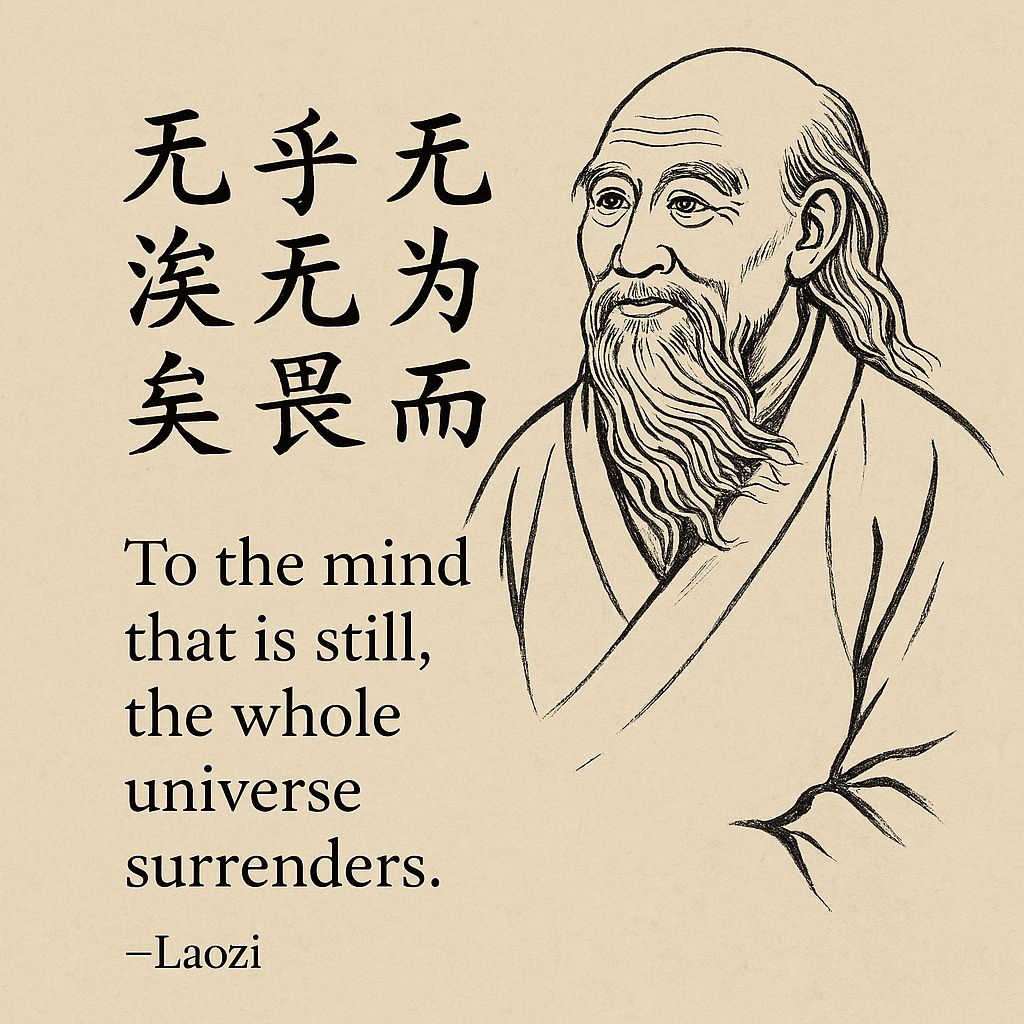
What if the answer is Taoism?
Now, before you tune out because you don’t know what that word means, “Tao” means “how.” That’s it. Not a god, not a religion with commandments—just a way. A how.
Taoism is the ancient Chinese philosophy of how nature works. And here’s the thing: it doesn’t try to conquer nature or outsmart it—it just watches. It studies the patterns, the flow, the effortless rhythm of the universe, and then says, “That. Do that.”
It teaches that there is a natural energy in life called Chi—the breath, the essence, the pulse that connects everything. When we align with it, we experience Wu-wei, which means “effortless action.” Flow. Being in sync with the how of life instead of fighting it.
Now hang with me, because here’s where it gets real.
Modern physics is just starting to catch up with this ancient insight. In quantum physics, there’s this wild idea called quantum entanglement. It says particles—tiny bits of matter and energy—can become linked, so that whatever happens to one, instantly affects the other, no matter how far apart they are.
In other words: everything is connected. Not just metaphorically, but literally. Energy responds to energy. Movement in one place shifts something in another. We’re all part of a cosmic field, flowing and vibrating together.
Sound familiar?
Taoism was saying this thousands of years ago. It just used poetry instead of lab reports.
Here’s where this matters: our society is anxious, angry, divided—not because we’ve lost the truth, but because we’ve lost the flow. We’ve become entangled with fear and outrage, and now everything feels stuck, frozen, combative. That’s not Wu-wei. That’s resisting the natural flow of healing, growth, and connection.
If we want to become a society that reflects our best selves, we need to start tuning our lives to positive energy. Joy. Peace. Compassion. Hope. Love. Those are not weak feelings—they are powerful forces of Chi. They are the vibrations that move us into harmony, not dissonance.
We can’t control the whole field, but we are part of it. And if we shift ourselves—one person, one choice, one breath at a time—we change the whole system.
So here’s the invitation:
Trust the flow. Lean into the Tao. Breathe in the Chi. Let Wu-wei carry you.
Stop fighting the current. Start floating in sync with the energy that made stars, forests, and oceans. It knows the way. It always has.
In today’s political discussions, terms like meritocracy, oligarchy, fascism, and authoritarianism are often thrown around. But how many people truly understand what they mean and how they relate to each other? These are not just abstract political concepts—they represent different ways power can be structured in society. More importantly, they help us recognize patterns in our own government. To understand what’s happening with the current administration, we must first define these terms and then examine the larger picture they create.
What is Meritocracy?
A meritocracy is a system where power and rewards are based on individual talent, effort, and achievement. The idea is that the best and brightest should lead, whether in government, business, or academia. The American Dream is often rooted in this ideal—work hard, prove yourself, and you’ll succeed. However, in practice, a pure meritocracy is difficult to achieve. Those born into privilege often have access to better education, connections, and opportunities, making it easier for them to rise to the top, even when merit alone might not justify it.
What is Oligarchy?
An oligarchy is rule by a small, elite group of people—usually the wealthy or powerful. While an oligarchy can coexist with democracy on the surface, power remains concentrated in the hands of a few. In the U.S., corporate lobbying, campaign financing, and wealth inequality often tilt the system in favor of the elite. When power is inherited or controlled by a select group regardless of merit, an oligarchy undermines the principles of a meritocracy.
What is Fascism?
Fascism is an authoritarian political system that emphasizes extreme nationalism, centralized power, suppression of dissent, and often a strong connection between government and corporations. It thrives on division, scapegoating, and the idea that a strong leader must protect the nation from perceived enemies—whether they be immigrants, political opponents, or the press. Fascism is not just about policy; it’s about a mindset that prioritizes power, loyalty, and obedience over democracy and pluralism.
What is Authoritarianism?
Authoritarianism is a broader term describing any system where a leader or ruling party demands total obedience and limits individual freedoms. While fascism is a specific form of authoritarianism, not all authoritarian governments are fascist. Some are based on religion, some on military rule, and others on a single-party system. In an authoritarian system, dissent is dangerous, power is centralized, and elections—if they exist—are often manipulated.
How Do These Concepts Connect?
These systems are not mutually exclusive. In fact, they often overlap:
A meritocracy can become an oligarchy if only a select few control access to education, wealth, and opportunity.
An oligarchy can turn authoritarian if those in power seek to maintain control by suppressing opposition.
An authoritarian government can become fascist when it fuses nationalism, corporate power, and suppression of dissent into an ideology of absolute control.
Historically, democracies that fail to check oligarchic tendencies often slide into authoritarianism, sometimes with a populist leader who promises to break the system but consolidates power instead.
Recognizing Patterns in the Current Administration
To evaluate what’s happening today, we must ask: Are we seeing meritocracy, where the best rise to leadership? Or are we witnessing oligarchy, where power is concentrated in the hands of the wealthy and well-connected? Are there authoritarian tendencies—attacks on the media, suppression of dissent, or power grabs? Is nationalism being weaponized in ways that resemble fascist movements of the past?
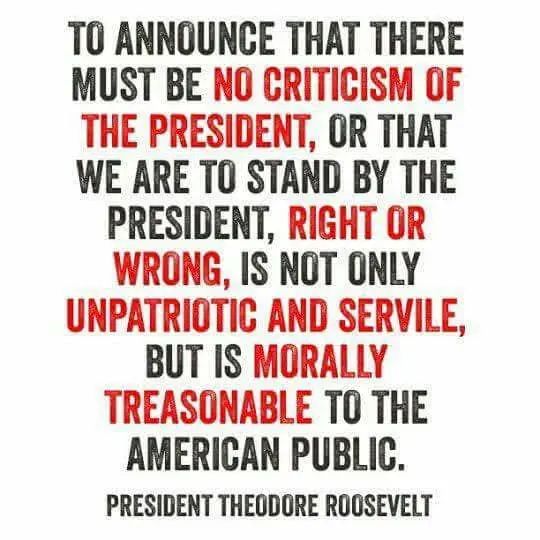
When political leaders dismiss elections they don’t win as fraudulent, when they threaten the press, when they undermine democratic institutions and scapegoat minorities, these are warning signs. If corporate and elite interests dictate policy while the average citizen struggles to be heard, democracy is at risk.
A Conscious Choice for the Future
Understanding these patterns is crucial because once a government tilts too far toward authoritarianism or oligarchy, reversing the trend becomes increasingly difficult. The real question Americans must ask is: Is this the type of government we want?
If the goal is true democracy, it requires active participation—voting, questioning leaders, demanding accountability, and ensuring that power is not concentrated in the hands of the few at the expense of the many. The future of the country is not determined by politicians alone; it’s shaped by the choices of its citizens.
The patterns are there for those willing to see them. The choice is ours.
Throughout history, moments of great technological and societal upheaval have often created the perfect environment for fear-based theology to thrive. The Industrial Revolution of the 18th and 19th centuries was a time of rapid change—machines replaced traditional labor, cities swelled with new populations, and uncertainty gripped the hearts of many. In this climate, apocalyptic teachings, like the doctrine of the Rapture, gained traction. The fear of a changing world made people eager for an escape, and many preachers found power in stoking that fear.
Today, we are living through another revolution—the rise of artificial intelligence. Just as the Industrial Revolution reshaped economies, AI is reshaping the way we work, think, and live. And once again, fear-based theology finds its place. Whether it’s predictions of AI taking control, societal collapse, or an end-times narrative tied to technological progress, fear continues to be a tool used to drive belief.
But fear will not save us.
Our saving grace is the love of God. The more we love God, neighbor, and self, the more we save the world. Fear will not save the world—I guarantee it! It is only the love of God that can save the world.
May God’s love transform our minds, hearts, and souls so that we will love God with all of our mind, heart, and soul, and love our neighbors as ourselves.
Evangelicalism, as a movement, took shape during the Great Awakenings of the 18th and 19th centuries. It emphasized personal conversion, the authority of Scripture, and an urgent call to spread the gospel. By the 19th century, new theological ideas, such as the doctrine of the Rapture, emerged, gaining traction among certain Christian groups, particularly in the United States.
The Rapture—the belief that Jesus will return to take true believers to heaven before a period of tribulation—was not widely accepted in the early church. It was popularized in the 19th century through the teachings of John Nelson Darby and later reinforced by the Scofield Reference Bible. This doctrine aligned with the anxieties of a rapidly changing world. Industrialization, war, and social upheaval left people searching for certainty. The Rapture provided a simple but fear-driven framework: believe the right way, or risk being left behind.
But fear was never the foundation of the gospel. John Wesley, the founder of Methodism, did not preach the Rapture. His focus was on holiness, grace, and the transformation of the heart. Wesley emphasized salvation as a lifelong journey of sanctification, where God’s grace works before, during, and after conversion. His sermons centered on love, holiness, and social justice—not on trying to scare people into faith. To Wesley, the gospel was not about escaping a doomed world but about becoming more like Christ and working for the kingdom of God here and now.
I do not believe in the doctrine of the Rapture because it distorts the heart of the gospel. Rather than emphasizing God’s love, it often becomes a tool for fear-based manipulation. Many evangelical churches use the threat of being “left behind” to pressure people into conversion. Instead of drawing people toward the message of Jesus, it pushes them into belief through anxiety over eternal damnation. This is not the gospel. The gospel is good news—that God’s love is for all people.
This became deeply personal for me when I was serving as a United Methodist minister. My 13-year-old daughter was attending an Evangelical church with her friends, where the focus on hell was relentless. One day, she asked me, “Daddy, why don’t you preach about hell?”
I told her, “Because I don’t think I should give evil a place in the church. I try not to preach people out of hell but into heaven.”
That has always been my belief. Jesus came into the world to preach the good news: that God loves all people. That all people are children of God. That God’s love is stronger than fear, stronger than punishment, and stronger than any human-made doctrine.
John Wesley understood this. He preached that God’s grace calls us into a deeper relationship, not through threats of destruction but through love that transforms. The gospel is not about who gets left behind—it’s about who gets embraced. And in God’s love, no one is abandoned.
In the quest for justice, humanity has long grappled with the balance between retribution and mercy. Two ancient philosophies stand in stark contrast: Hammurabi’s Code of Retribution and Jesus’ Law of Mercy. While both aim to establish order and fairness, their approaches could not be more different. This blog explores these two systems, compares their principles, and ultimately argues why mercy, as taught by Jesus, is the superior foundation for true justice.
Hammurabi’s Code: Justice as Retribution
Hammurabi’s Code, dating back to 1754 BCE in ancient Babylon, is one of the earliest known legal systems. Its most famous principle is lex talionis, or the law of retribution, often summarized as “an eye for an eye, a tooth for a tooth.” This system was designed to ensure that punishments were proportional to the crimes committed. At its core, Hammurabi’s Code sought to deter wrongdoing by instilling fear of severe consequences.
On the surface, this approach seems fair—punishment fits the crime, and no one is exempt from accountability. However, this system has significant flaws. First, it operates on a rigid, transactional view of justice, leaving little room for context or compassion. Second, it perpetuates cycles of violence and harm, as retribution often breeds more retribution. Finally, it fails to address the root causes of wrongdoing, such as poverty, inequality, or ignorance, focusing instead on punitive measures.
Jesus’ Law of Mercy: Justice as Restoration
In contrast, Jesus’ teachings, as recorded in the New Testament, introduced a radical concept of justice rooted in mercy and love. Jesus famously challenged the principle of lex talionis in the Sermon on the Mount, saying, “You have heard that it was said, ‘Eye for eye, and tooth for tooth.’ But I tell you, do not resist an evil person. If anyone slaps you on the right cheek, turn to them the other cheek also” (Matthew 5:38-39). This teaching emphasizes forgiveness, compassion, and the transformation of hearts rather than the infliction of punishment.
Jesus’ Law of Mercy seeks to break the cycle of violence and retribution. It calls for understanding the humanity of both the victim and the offender, addressing the underlying causes of harm, and fostering reconciliation. Mercy does not mean ignoring wrongdoing; rather, it means responding to it in a way that promotes healing and restoration for all parties involved.
Comparing the Two Systems
Purpose of Justice:
Hammurabi’s Code aims to maintain order through fear and punishment.
Jesus’ Law of Mercy aims to restore relationships and transform lives through love and forgiveness.
Approach to Wrongdoing:
Hammurabi’s Code is rigid and transactional, focusing on proportional retribution.
Jesus’ teachings are flexible and relational, focusing on understanding and redemption.
Outcome:
Hammurabi’s Code often perpetuates cycles of violence and division.
Jesus’ Law of Mercy fosters healing, reconciliation, and community.
Which System Establishes True Justice?
While Hammurabi’s Code may seem fair in its simplicity, it falls short of establishing true justice. True justice is not merely about punishing wrongdoing but about creating a society where wrongdoing is less likely to occur. This requires addressing systemic issues, fostering empathy, and promoting reconciliation—all of which are central to Jesus’ Law of Mercy.
Mercy is not weakness; it is strength. It takes courage to forgive, to seek understanding, and to work toward restoration. A justice system rooted in mercy recognizes the inherent dignity of every individual, even those who have done wrong. It seeks to heal rather than harm, to build bridges rather than walls.
Why Mercy is Best for Establishing Justice
It Breaks Cycles of Violence: Retribution often leads to endless cycles of harm. Mercy interrupts these cycles, creating space for healing and peace.
It Addresses Root Causes: Mercy encourages us to look beyond the surface and address the underlying causes of wrongdoing, such as poverty, trauma, or ignorance.
It Promotes Human Dignity: Mercy affirms the worth of every individual, fostering a culture of respect and compassion.
It Builds Stronger Communities: A society that values mercy over retribution is one where relationships are restored, trust is rebuilt, and communities thrive.
Conclusion
Hammurabi’s Code of Retribution and Jesus’ Law of Mercy represent two very different approaches to justice. While retribution may offer a quick fix, it fails to address the deeper issues that lead to harm. Mercy, on the other hand, offers a path to true justice—one that heals, restores, and transforms. As we navigate the complexities of justice in our own lives and societies, let us remember the power of mercy to create a world that is not only fair but also compassionate and whole.
In the words of Jesus, “Blessed are the merciful, for they will be shown mercy” (Matthew 5:7). Let us choose mercy, for it is the foundation of a just and loving world.
What are your thoughts on mercy versus retribution? Share your perspective in the comments below!
Our brains are wired to adapt. Every thought, action, and behavior we repeat strengthens the neural pathways that make up who we are and how we function. When we talk about rewiring the brain, we’re talking about changing these pathways—literally reshaping how neurons in our brains connect and communicate.
Neurons, Synapses, and the Wiring of the Brain
Neurons are the brain’s messengers. They communicate with each other through tiny connections called synapses, transmitting information that shapes our habits, thoughts, and behaviors. When we repeat an action or behavior, our brain strengthens the synapses related to that activity—a process called synaptogenesis. Imagine it like adding wires to a circuit; the more wires, the stronger the connection.
When we’re learning something new, or forming a new habit, the brain goes through a period of synaptic blooming—creating lots of new connections, almost like laying down a maze of cables. But not all of these connections stick around. The brain, being incredibly efficient, eliminates the ones we don’t use, a process called synaptic pruning. This is where habits become crucial: the pathways we use often are strengthened, while the unused ones wither away.
Think of it like wiring in a house. A small habit is like a thin wire, capable of carrying a little bit of electricity. But as you repeat that habit, the wire gets replaced with a thicker one, capable of carrying more power. This is why habits feel easier over time—your brain has literally upgraded its wiring to support that behavior. The same principle applies when breaking bad habits. If you stop using a pathway, it begins to degrade, like a wire corroding over time.
The Role of Habits in Rewiring the Brain
Changing a habit is like rewiring an electrical system. If you want a certain behavior to become automatic, you need to strengthen the pathway by practicing it consistently. Conversely, breaking a bad habit means stopping the use of the pathway so it weakens and eventually disappears. Research shows that it takes about 21 to 66 days to form a new habit, but breaking a habit can take even longer—especially if it’s deeply ingrained. The process depends on synaptic pruning, which happens when the brain eliminates unused synapses.
The beauty of this process is that it’s not about erasing the bad habit entirely; it’s about replacing it with a better one. The brain never leaves a pathway empty—it’s always looking to rewire.
My Journey: Rewiring a Brain That Craved Alcohol
Ten years ago, I had to rewire my brain completely. I was an alcoholic. My brain didn’t just crave alcohol—it was wired for it. The pathways were deeply ingrained, and every day without a drink felt like fighting against the current.
When I decided to get sober, I realized it wasn’t just about willpower. I had to change my habits—rewire my brain. I did this through mindfulness, practicing gratitude, and working the 12-step program. These practices became my new habits, slowly replacing the old pathways with new, healthier ones.
The process wasn’t quick or easy. At first, the craving for alcohol was overwhelming, but as I consistently practiced new habits, the old pathways began to wither. My brain created stronger, healthier connections—ones that didn’t include alcohol. Over time, I noticed I didn’t crave alcohol anymore. That craving, that pull, was gone.
Today, I’ve been sober for 10 years. My brain, once wired for addiction, is now wired for gratitude, mindfulness, and clarity. It took effort and time, but it worked. I literally had to work a program to reprogram my brain—and I am living proof that rewiring the brain is possible.
As the leaves turn and the air crisps, the anticipation of holiday gatherings begins to brew. These occasions, meant to be times of joy and reunion, can unfortunately transform into battlegrounds of political and moral debate, especially in today’s charged climate. Given the intense polarization in society, how can we traverse these gatherings with grace, ensuring the turkey is the only thing that gets carved up at dinner? Here’s a guide to keeping peace and cherishing relationships amidst differing views.
1. Set Ground Rules Early
Before everyone arrives, consider setting some gentle ground rules. Communicating via a family email or group chat that the upcoming gathering is intended to be a politics-free zone can preempt potential conflicts. Encourage a focus on what unites rather than divides, suggesting that political discussions be saved for another time and place.
2. Redirect with Tact
Despite preemptive measures, political topics might still seep into conversations. Have a few neutral conversation changers at the ready. If Uncle Bob starts in on a heated political topic, you might interject with, “That’s interesting, Bob. Hey, didn’t you recently finish renovating your kitchen? We’d love to hear about that!” Redirecting conversations to personal life events, shared memories, or neutral topics like movies or travel can help diffuse tension.
3. Emphasize Shared Values
Sometimes, steering away from politics entirely might be impossible. In such cases, try to steer the conversation towards underlying values that everyone shares, such as the importance of family, the joy of togetherness, or aspirations for health and happiness. This approach doesn’t dismiss differing opinions but refocuses the discussion on common ground.
4. Active Listening and Respect
Practice active listening. This means really hearing what the other person is saying without planning your rebuttal in your head. Acknowledge their feelings and viewpoints without necessarily agreeing. For example, “I see you feel strongly about this, and I appreciate you sharing your perspective.” Showing respect for another’s view doesn’t mean you endorse it, but it helps maintain harmony.
5. Know When to Step Away
Recognize when a conversation is headed nowhere positive. If tensions rise despite your best efforts, it’s okay to politely excuse yourself from the discussion. Sometimes the bravest thing to do is to walk away before words cause irreversible harm.
6. Focus on the Kids (or Pets)
Children and pets have a wonderful way of bringing people together. If you find the adult conversation is turning sour, engage with the children or start a game that involves everyone. Initiating an activity like a board game or group walk can also shift the focus from divisive dialogue to cooperative fun.
7. Practice Empathy and Compassion
Remember that everyone arrives at their views through a series of life experiences. Practicing empathy—understanding that these experiences shape vastly different worldviews—can foster compassion over conflict.
Conclusion: A Time for Togetherness
Holidays are precious; they’re opportunities to reconnect, reflect, and make new memories. In these times of division, let us use these gatherings not as platforms for debate but as sanctuaries of peace and enjoyment. By consciously choosing to prioritize relationships over being right, we can create an atmosphere where love and understanding prevail, no matter the political climate. So this holiday season, let’s raise our glasses not in toast to winning arguments, but to cherishing the time we have with those we love.
In our fast-paced world, true listening has become a rare and precious gift. We often hear people, but how often do we truly listen? Henry Nouwen’s book, The Wounded Healer, offers profound insights into the act of listening as a tool for healing, understanding, and connection. In this book, Nouwen emphasizes that to be a healer, one must first understand their own wounds, and in that space of vulnerability, offer a more compassionate ear to others.
The Premise of The Wounded Healer
Nouwen’s The Wounded Healer is centered around the idea that ministers, counselors, and anyone called to help others must first recognize their own pain and brokenness. Rather than approaching others from a place of superiority or emotional distance, Nouwen suggests that it is our shared humanity—our wounds—that create the strongest bonds of connection. By embracing our own struggles, we open ourselves up to others’ stories in a more meaningful way.
Listening, according to Nouwen, is more than just a skill; it’s a sacred act of presence. It is within this space of vulnerability and openness that true healing occurs. Nouwen identifies several key aspects of listening that are vital for anyone who wishes to be a compassionate presence in the lives of others.
Listening Without Prejudgment
One of Nouwen’s core messages is that we must listen without preconceived notions. Too often, we enter conversations with judgments, assumptions, or solutions in mind. Nouwen challenges us to lay aside these tendencies and approach each interaction with a fresh perspective. By doing so, we allow the other person to fully express themselves without fear of being misunderstood or categorized. This form of listening opens the door to genuine empathy, where the listener is truly focused on the speaker’s experience rather than their own opinions or agenda.
Listening With the Whole Self
Nouwen emphasizes that true listening is not merely about hearing words; it is about being fully present. This means engaging all of our senses and bringing our entire selves into the act of listening. Listening with the whole self requires a quiet mind, an open heart, and even body language that communicates attentiveness and care. When we give someone our full attention, we convey that their words—and by extension, they themselves—are valuable and worthy of being heard.
Listening in Silence
Sometimes, the most powerful response is no response at all. Listening in silence, Nouwen teaches, allows space for the speaker to process their own thoughts and emotions. In a culture that often demands quick fixes and immediate answers, sitting quietly in another’s pain or confusion can be uncomfortable. Yet, this silence is a gift. It provides the speaker the room to find their own clarity and understanding, without the pressure of being rushed or interrupted.
Listening as Hospitality
Nouwen uses the metaphor of listening as hospitality to describe how we should open our hearts to others. Just as a good host creates a welcoming environment for guests, a good listener creates a safe space for the speaker to feel heard and accepted. This type of listening is not about problem-solving or offering advice, but about making someone feel at home within the conversation. It invites the speaker to be vulnerable and honest, knowing they will be met with acceptance and warmth.
Listening to Our Own Woundedness
Perhaps the most profound form of listening Nouwen advocates is listening to our own woundedness. By paying attention to our inner struggles and vulnerabilities, we become more compassionate and attuned to the pain of others. This self-awareness allows us to offer deeper empathy because we recognize the shared experience of being human. It is from this place of mutual understanding that true connection and healing can occur.
Conclusion: Listening as a Path to Healing
Henry Nouwen’s The Wounded Healer invites us to reframe the way we listen. Instead of approaching conversations as transactional or purely informational, Nouwen encourages us to see listening as a sacred practice—one that can offer healing, not just for others, but for ourselves. In our woundedness, we find the key to being more empathetic, present, and compassionate listeners.
As we strive to be better listeners, may we remember that true listening is an act of love—a profound way of saying, “You matter, and I am here for you.”
Let’s talk about something that tends to fly under the radar, but impacts all of us—math and reading scores. Across the U.S., there are states where students consistently perform below national averages, particularly in math and reading. But why? What’s going on in these regions that holds students back from reaching their full potential?
I’ve done some digging into the research, and here’s what I found—this issue is way more complex than we often realize. It’s not just about teachers or schools. It’s about economics, resources, health, and even geography. Let’s break it down.
1. The Poverty Trap
First up: socioeconomic factors. We all know that poverty can have far-reaching consequences, but when it comes to education, the impact is especially stark. Students from low-income families often come to school at a disadvantage. They might not have access to books or the internet at home, and basic needs like nutrition and healthcare often go unmet. It’s hard to focus on learning algebra when you’re worried about your next meal.
Parents with lower educational attainment can also struggle to provide the academic support their kids need. This isn’t about blame—it’s about the reality that many parents are working multiple jobs just to keep the lights on, leaving little time or energy for homework help.
2. The Money Problem: School Funding Matters
Here’s a big one: school funding. If you’ve ever wondered why schools in wealthier areas seem to outperform those in poorer regions, the answer often boils down to money. Schools in low-income areas typically receive less funding, which means fewer resources—whether it’s technology, updated textbooks, or even basic supplies like pencils and paper.
And let’s talk about teachers. More funding often means better salaries, which helps attract and retain quality teachers. Without this, schools in lower-funded areas tend to have higher turnover rates, leaving students with less experienced, and sometimes under-qualified, educators.
3. Teacher Shortages and Turnover
Speaking of teachers, there’s a real teacher shortage issue happening, especially in states where math and reading scores are lowest. The states struggling the most often can’t retain their best teachers, leading to frequent turnover. Imagine trying to build any momentum in your learning when a new teacher comes in every year. It’s tough. Plus, schools with fewer resources can’t always offer professional development or specialized training in math and reading, which means teachers may not be fully equipped to meet the challenges of their classrooms.
4. Outdated Curriculums Aren’t Helping
A major factor that gets less attention? Curriculum. Some states are using outdated teaching materials that don’t align with modern education standards. In math, especially, this can be a disaster. When students aren’t engaged or challenged by the material, it’s no wonder their scores start to slip.
Worse yet, many schools in low-scoring states spend less time on math and reading because they’re caught up in preparing students for standardized tests. We’ve all heard the phrase “teaching to the test,” and it’s a real problem. Focusing too much on test prep can leave students without a deeper understanding of core subjects like math and reading.
5. The Test Anxiety Trap
And while we’re on the topic of tests, let’s address test anxiety. In states where scores are low, students often face high-pressure environments. This can lead to stress, which tanks performance. We’ve all been there—the more stressed you are about an exam, the harder it is to focus and do well. Multiply that by an entire state’s education system, and you can see how high-stakes testing creates a vicious cycle.
6. Early Education—or Lack Thereof
Here’s another nugget that’s crucial to understand: early childhood education matters. Big time. Research consistently shows that kids who attend quality preschools enter kindergarten better prepared. But in many low-performing states, access to these programs is limited. Without those early skills in place, students often struggle to catch up in later grades, especially when it comes to reading and math.
7. Language Barriers and Cultural Disconnects
In states with large populations of English Language Learners (ELLs), language can be a barrier to success in reading and math. It’s not that these students can’t do the work, but imagine trying to solve a math word problem when you’re still learning the language it’s written in. It’s a tall order.
On top of that, when the curriculum doesn’t reflect students’ cultural backgrounds, they can become disengaged, making it harder to connect with the material—especially in reading, where context is key to comprehension.
8. Rural vs. Urban Challenges
Whether a state is rural or urban can also play a huge role in its math and reading scores. Rural schools often struggle with isolation, fewer resources, and difficulty attracting qualified teachers. Meanwhile, urban schools can be overcrowded, underfunded, and face challenges related to poverty and inequality. The result? Both groups face unique, but significant, obstacles that drag down student performance.
9. Health and Well-Being: The Silent Factor
It’s hard to separate academic performance from health and well-being. Poor nutrition, lack of healthcare, and untreated learning disabilities all contribute to lower scores. Some kids might be struggling with vision or hearing issues, making it harder to engage in class. Others might be dealing with emotional stress from family instability, which makes focusing on school a major challenge.
10. Community and Parental Support
Lastly, let’s not overlook the importance of parental and community involvement. In lower-scoring states, there’s often less parental engagement, not because parents don’t care, but because they’re stretched thin. Working multiple jobs, economic pressures, or a lack of education themselves can limit how much support they can offer. Schools need strong communities and involved parents to thrive.
The Bottom Line
So, why do some states struggle with low math and reading scores? It’s a tangled web of factors that goes far beyond the classroom. It’s about the resources we provide, the teachers we attract, and the support we offer families. It’s about the systems we build—or, in many cases, fail to build.
To turn things around, we need to address these issues holistically. That means boosting school funding, supporting teachers, investing in early childhood education, and offering real help to the communities that need it most.
Because here’s the thing: when students struggle in math and reading, it’s not just their problem. It’s all of ours.







 GPTs-and-Me